Introduction
There’s a reason some spaces instantly feel calm the moment you walk in. They don’t shout for attention, yet they stay with you. japandi interiors do exactly that—quietly balancing beauty, function, and emotional comfort.
At its core, japandi blends Japanese serenity with Scandinavian warmth. It’s not about trends or showy décor; it’s about creating a home that feels grounded, intentional, and deeply human. In a world full of visual noise, this style offers something rare: visual silence without emptiness.
People are turning to this aesthetic because it works in real life. Small apartments, family homes, and modern villas all benefit from its focus on simplicity, craftsmanship, and warmth. That’s why japandi isn’t fading—it’s evolving into a modern classic.
Table of Contents
What Is Japandi?
The Origins of Japandi Style
Core Principles of Japandi Interior Design
Japandi Color Palette Explained
Furniture Choices That Define Japandi
Materials and Textures That Matter
Japandi Room-by-Room Styling Guide
Common Japandi Mistakes to Avoid
Why Japandi Works So Well in Modern Homes
Japandi vs Scandinavian vs Japanese Design
FAQ
Conclusion
What Is Japandi?
Japandi is an interior design style that merges Japanese minimalism with Scandinavian functionality. It takes the calm, imperfect beauty of Japanese philosophy and combines it with the cozy practicality of Nordic living.
Unlike stark minimalism, this approach feels warm. Unlike rustic styles, it feels refined. The result is a space that’s simple but not cold, minimal but never empty.
Defining Japandi in Simple Terms
Japandi design focuses on:
- Fewer, better-quality items
- Natural materials over synthetic finishes
- Calm color palettes with depth
- Furniture that serves both beauty and purpose
Used thoughtfully, japandi creates interiors that age well—emotionally and visually.
The Origins of Japandi Style
Although the name feels modern, the philosophy is not. Japanese and Scandinavian cultures share surprisingly similar values when it comes to living spaces.
Japanese Influence: Wabi-Sabi
From Japan comes wabi-sabi—the appreciation of imperfection, age, and authenticity. This is why japandi spaces often feature handmade ceramics, raw wood, and subtle asymmetry.
Scandinavian Influence: Hygge & Lagom
Scandinavian design contributes warmth and balance. Concepts like hygge (coziness) and lagom (just enough) ensure spaces feel welcoming, not austere.
Together, these traditions formed a design language that feels timeless rather than trendy.
Core Principles of Japandi Interior Design
Japandi isn’t about copying a look; it’s about following a mindset.
1. Function Comes First
Every object should have a purpose. Decorative items are intentional, not filler.
2. Quality Over Quantity
Instead of many inexpensive pieces, japandi favors fewer, well-crafted items that last years.
3. Calm Visual Flow
Clean lines, open space, and visual balance reduce mental clutter and stress.
4. Natural Connection
Plants, wood, stone, and daylight are essential. Nature is not an accent—it’s a foundation.
Japandi Color Palette Explained
Color plays a huge role in making japandi feel warm rather than stark.
Typical Japandi Colors
- Soft whites and warm off-whites
- Beige, sand, and greige
- Muted greens and clay tones
- Charcoal, ink, and soft black for contrast
Bright colors are rare, but deep accent tones—like forest green or terracotta—are used sparingly for depth.
Furniture Choices That Define Japandi
Furniture is where this style truly comes alive.
Key Characteristics
- Low-profile silhouettes
- Clean, simple forms
- Solid wood construction
- Visible craftsmanship
Think oak dining tables, linen-upholstered sofas, and chairs that look sculptural without being flashy. Japandi furniture feels grounded, almost anchored to the space.
Materials and Textures That Matter
Texture replaces decoration in japandi interiors.
Common Materials
- Light and dark natural woods
- Linen, cotton, and wool
- Stone, clay, and ceramics
- Bamboo, rattan, and paper
Mixing textures prevents the space from feeling flat, even when the color palette stays neutral.
Japandi Room-by-Room Styling Guide
Japandi Living Room
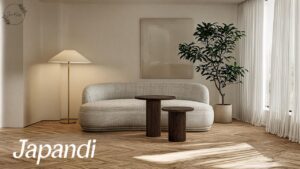
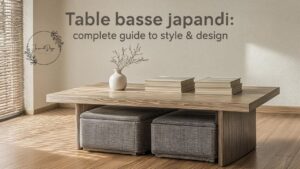
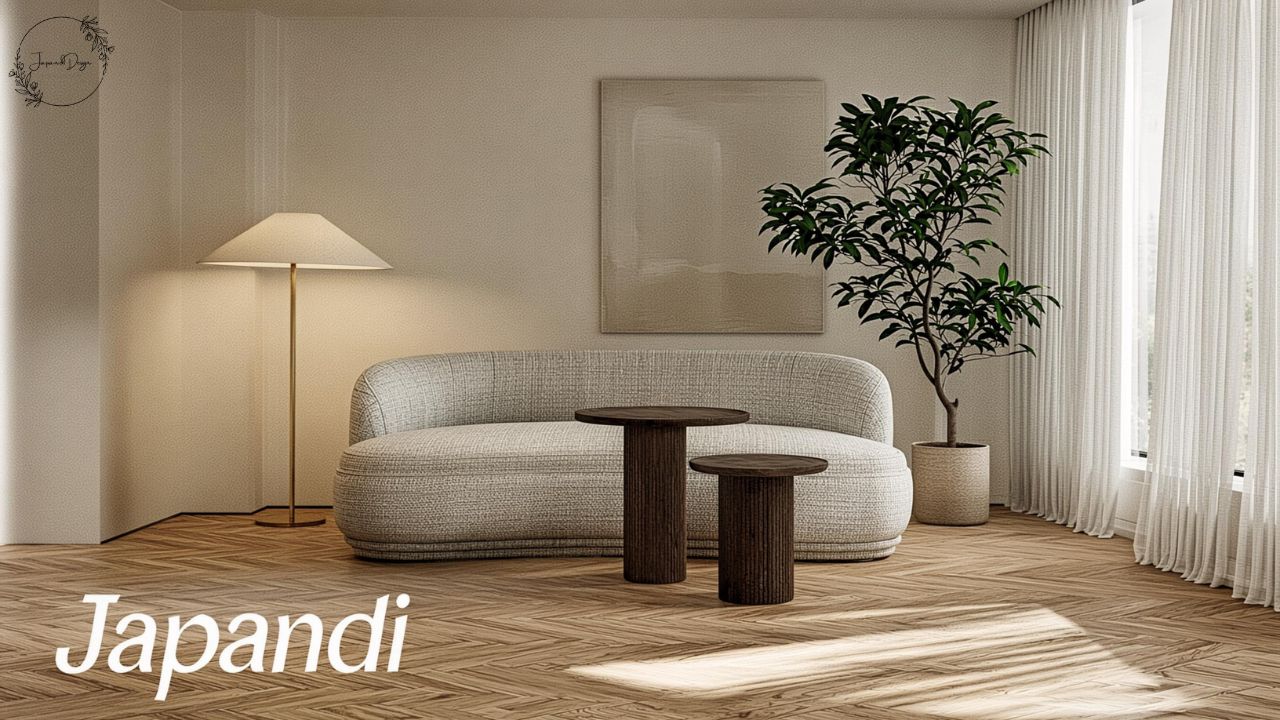
Keep furniture minimal and low to the ground. A neutral sofa, wooden coffee table, soft rug, and one or two meaningful décor pieces are enough.
Japandi Bedroom
Bedrooms should feel restorative. Choose soft bedding, warm lighting, and avoid visual clutter. Storage should be hidden wherever possible.
Japandi Kitchen
Flat-panel cabinets, matte finishes, open shelving, and natural countertops define the look. Function always leads design here.
Japandi Bathroom
Stone textures, wood accents, and soft lighting turn bathrooms into spa-like retreats.
Common Japandi Mistakes to Avoid
Even a calm style can go wrong if misunderstood.
- Over-minimalizing until the space feels cold
- Using too much black without warmth
- Mixing too many styles at once
- Choosing trendy items instead of timeless pieces
Japandi works best when patience guides decisions.
Why Japandi Works So Well in Modern Homes
Modern life is busy, loud, and overstimulating. Japandi interiors counter that with calm and order.
Studies in environmental psychology show that uncluttered, natural spaces reduce stress and improve focus. Homes designed with japandi principles often feel easier to live in—not just nicer to look at.
That’s why this style suits:
- Urban apartments
- Family homes
- Work-from-home spaces
- Boutique hotels and cafés
Japandi vs Scandinavian vs Japanese Design
While related, these styles aren’t identical.
| Feature | Japanese | Scandinavian | Japandi |
|---|---|---|---|
| Minimalism | Deep, philosophical | Practical | Balanced |
| Warmth | Subtle | Cozy | Warm-minimal |
| Materials | Natural, raw | Light wood, textiles | Refined natural mix |
| Mood | Meditative | Comfortable | Calm & welcoming |
Japandi sits perfectly in the middle, borrowing the best from both worlds.
FAQ
What does japandi mean?
Japandi refers to a hybrid interior style combining Japanese minimalism with Scandinavian design principles.
Is japandi suitable for small homes?
Yes. Its focus on function, storage, and simplicity makes small spaces feel larger and calmer.
Can japandi include modern elements?
Absolutely. Modern lighting and clean-lined furniture fit well if they respect the overall calm aesthetic.
Is japandi expensive to achieve?
Not necessarily. While it favors quality, you can build it gradually by replacing items over time.
Does japandi allow color?
Yes, but colors are muted and intentional rather than bold or decorative.
How many décor items are ideal?
There’s no fixed number, but each item should earn its place visually and functionally.
Can japandi work with kids?
Yes. Durable materials and uncluttered layouts make it practical for families.
Is japandi still trending?
It’s less of a trend and more of a long-term design philosophy, which is why it continues to grow.
Conclusion
Japandi isn’t about perfection—it’s about balance. By combining Japanese calm with Scandinavian warmth, it creates homes that feel peaceful without feeling empty.
When done thoughtfully, japandi becomes more than a design style. It becomes a way of living that values intention, comfort, and quiet beauty. In a fast, noisy world, that kind of home isn’t just stylish—it’s necessary.