Introduction
There’s something quietly comforting about a home that feels calm without feeling cold. That’s exactly why japandi style has taken over design conversations across the world. It’s not loud. It doesn’t chase trends. Instead, it settles in—slowly, thoughtfully, and with intention.
At its heart, japandi style blends the soul-soothing simplicity of Japanese interiors with the cozy practicality of Scandinavian design. The result? Spaces that feel uncluttered yet warm, minimal yet deeply human. In reality, this style isn’t about perfection—it’s about balance.
If you’ve ever walked into a room and instantly felt relaxed without knowing why, chances are it followed japandi principles. This guide breaks down what makes the style so magnetic, how it works in real homes, and how you can apply it without overthinking every detail.


Table of Contents
What Is Japandi Style?
The Origins of Japandi Style
Core Principles of Japandi Style
Colors, Materials, and Textures in Japandi Style
Furniture and Layout: Less but Better
Lighting in Japandi Interiors
Japandi Style Room-by-Room Guide
Common Mistakes to Avoid
Is Japandi Style Worth the Investment?
FAQ
Conclusion
What Is Japandi Style?
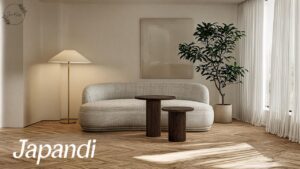
Japandi style is a hybrid interior design approach that merges Japanese minimalism with Scandinavian functionality. It emphasizes clean lines, natural materials, muted colors, and purposeful living. Unlike ultra-modern minimalism, it doesn’t feel sterile. Unlike rustic styles, it never feels cluttered.
The philosophy behind japandi style is rooted in intentional living—choosing fewer items, but choosing them well. Every object has a role, whether functional, emotional, or both.
In practical terms, this means:
- Neutral, earthy color palettes
- Natural materials like wood, linen, and stone
- Low-profile furniture
- A strong sense of balance and negative space
The Origins of Japandi Style
At first glance, Japan and Scandinavia seem worlds apart. However, culturally, they share more similarities than most people realize. Both value craftsmanship, simplicity, and harmony with nature.
Japanese design draws heavily from Zen philosophy and the concept of wabi-sabi—finding beauty in imperfection and impermanence. Scandinavian interiors, shaped by long winters and limited daylight, focus on warmth, comfort, and practicality.
When designers began blending these two approaches, japandi style emerged naturally. It wasn’t forced. It evolved as a response to fast consumerism and overly decorative interiors.
Core Principles of Japandi Style
Minimalism with Warmth
Japandi minimalism isn’t about empty rooms. It’s about breathing space. Furniture is intentionally spaced. Decor is limited, but never absent.
Function Comes First
If something doesn’t serve a purpose, it usually doesn’t belong. This doesn’t mean your home becomes boring—it becomes efficient and calming.
Craftsmanship Over Trends
Mass-produced decor takes a back seat. Handmade ceramics, solid wood furniture, and artisanal textiles define the look.
Nature as a Design Partner
Plants, daylight, raw wood, and organic textures play a central role. Nature isn’t an accent—it’s part of the structure.
Colors, Materials, and Textures in Japandi Style
Color Palette
Japandi interiors favor subdued tones:
- Warm whites and soft beiges
- Muted greys and greige
- Earthy browns
- Occasional charcoal or black for contrast
Bright colors are rare but not forbidden. When used, they appear as subtle accents—never dominant.
Materials That Matter
Natural materials are non-negotiable in japandi style:
- Light to medium-toned woods (oak, ash, birch)
- Linen, cotton, and wool textiles
- Stone, clay, and ceramic finishes
- Matte metals instead of glossy chrome
Texture Over Decoration
Rather than decorative clutter, texture adds interest. A rough ceramic vase or a woven throw can replace multiple decorative items.
Furniture and Layout: Less but Better
Japandi furniture tends to be:
- Low-profile
- Simple in shape
- Solid in construction
Think low sofas, platform beds, and minimalist dining tables. Storage is often hidden, maintaining visual calm.
Layouts favor openness. Instead of filling every corner, negative space is treated as a design element. However, the space never feels empty—it feels intentional.
Lighting in Japandi Interiors
Lighting sets the emotional tone of japandi spaces. Harsh lighting breaks the mood instantly.
Key Lighting Rules
- Use warm bulbs instead of cool white
- Layer lighting: ambient, task, and accent
- Choose paper, fabric, or frosted glass shades
- Maximize natural daylight whenever possible
Soft shadows and diffused light create the calm atmosphere japandi style is known for.
Japandi Style Room-by-Room Guide
Living Room
The living room often becomes the heart of a japandi home.
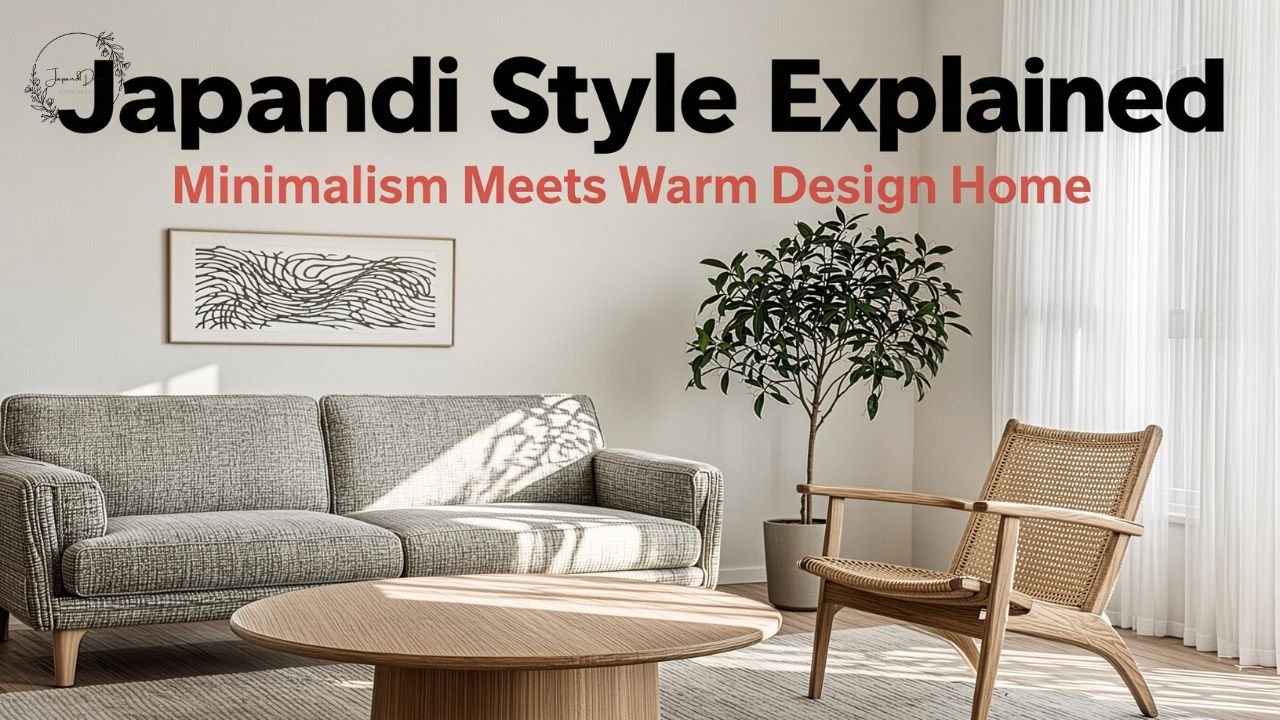
- Neutral sofa with clean lines
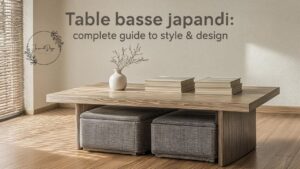
- Wooden coffee table with visible grain
- Minimal decor: one ceramic piece, one plant
- Soft rug in natural fibers
Bedroom
This is where japandi truly shines.
- Low bed frame
- Linen bedding in neutral tones
- Wooden bedside tables
- Minimal wall decor
The goal is rest, not stimulation.
Kitchen
Japandi kitchens prioritize functionality.
- Flat-front cabinets
- Wood and stone surfaces
- Open shelving with restraint
- Neutral backsplash tones
Bathroom
Spa-like simplicity defines japandi bathrooms.
- Natural stone or concrete textures
- Wood accents
- Soft lighting
- Minimal accessories
Common Mistakes to Avoid
Even though japandi style looks simple, it’s easy to get wrong.
Over-Minimalizing
Removing everything creates a cold space. Japandi requires warmth.
Mixing Too Many Styles
Adding industrial or boho elements can disrupt the balance.
Cheap Materials
Since decor is minimal, low-quality materials stand out immediately.
Ignoring Comfort
Aesthetic should never compromise comfort—especially in Scandinavian-inspired spaces.
Is Japandi Style Worth the Investment?
From a long-term perspective, yes. While initial costs may be higher due to quality materials, japandi style promotes longevity. You buy fewer items, replace them less often, and live in a space that doesn’t feel dated after a year.
Psychologically, studies show that clutter-free, nature-inspired environments reduce stress and improve focus. In reality, that alone makes the investment worthwhile.
FAQ
What makes japandi style different from minimalism?
Japandi adds warmth and texture, while traditional minimalism can feel cold or overly strict.
Is japandi style expensive to achieve?
It can be budget-friendly if you focus on fewer, high-quality pieces and avoid overdecorating.
Can japandi style work in small apartments?
Absolutely. The emphasis on space and functionality makes it ideal for smaller homes.
What colors are best for japandi interiors?
Warm neutrals, earthy tones, and muted shades work best.
Is japandi style suitable for families?
Yes. Its functional layout and durable materials make it family-friendly.
Can I mix modern furniture with japandi style?
Yes, as long as the furniture follows clean lines and neutral tones.
Does japandi style follow trends?
No. It’s rooted in timeless design rather than seasonal trends.
Conclusion
Japandi style isn’t about copying a look from a magazine. It’s about creating a home that feels calm, balanced, and genuinely livable. By blending Japanese restraint with Scandinavian comfort, it offers a design philosophy that respects both beauty and function.
In a world that often feels loud and rushed, japandi interiors quietly remind us to slow down, choose intentionally, and live with less—but better.