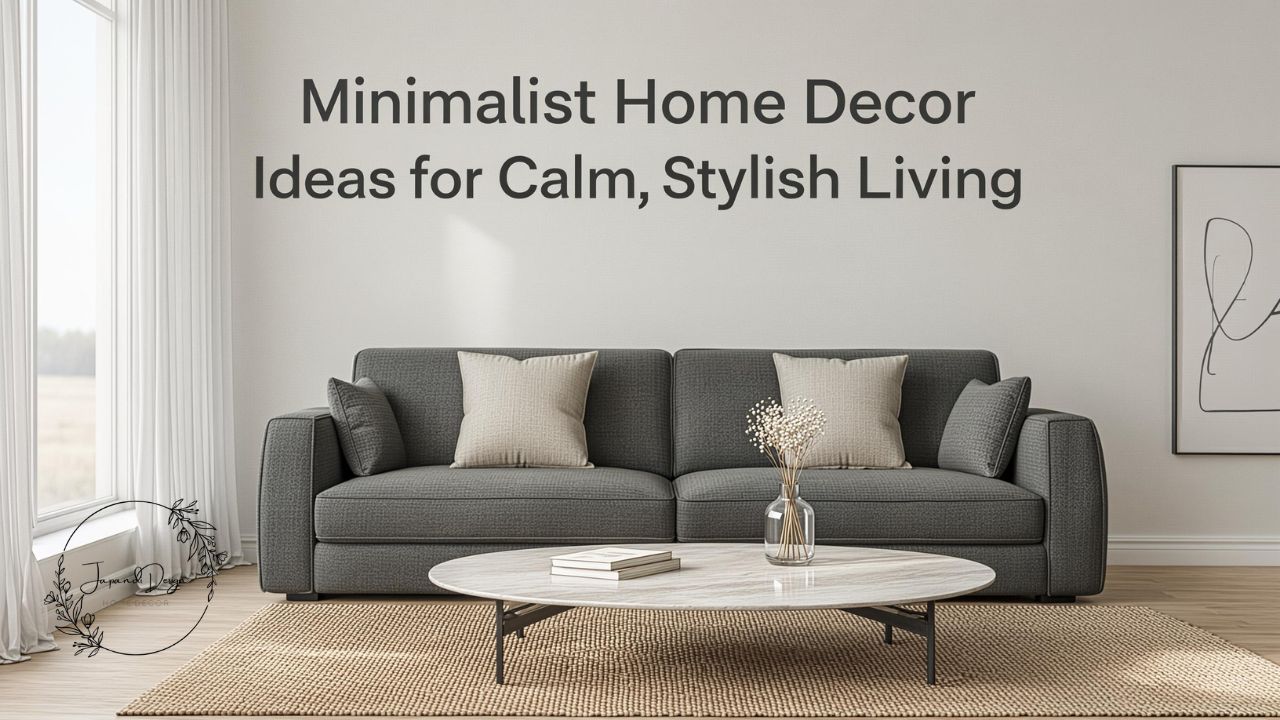
Introduction
There’s a quiet relief that comes from walking into a space that feels open, calm, and intentional. No visual noise. No unnecessary clutter. Just balance, light, and breathing room. That emotional response is exactly why minimalist home decor has become more than a design trend—it’s a lifestyle choice for people craving clarity in a noisy world.
In reality, minimalist spaces aren’t cold or empty. They’re thoughtful. Every piece has a purpose, and every corner feels considered. From urban apartments to family homes, this design philosophy adapts beautifully to modern life.
HouseBeautifull.org shares expert tips on home improvement, interior design, real estate insights, DIY ideas, and lifestyle inspiration.
However, embracing minimalism isn’t about getting rid of everything you own. It’s about keeping what matters—and designing a home that supports how you want to live, not just how it looks on social media.


Table of Contents
Table of Contents
- What Is Minimalist Home Decor?
- The Philosophy Behind Minimalist Living
- Core Principles of Minimalist Home Decor
- Color Palettes That Define Minimalism
- Furniture Choices That Matter
- Minimalist Home Decor for Small Spaces
- Lighting in Minimalist Interiors
- Textures, Materials, and Subtle Warmth
- Common Mistakes to Avoid
- Personal Background: The Rise of Minimalist Design
- Frequently Asked Questions
- Conclusion
What Is Minimalist Home Decor?
Minimalist home decor is a design approach centered on simplicity, function, and intentionality. Instead of filling a room with decorative items, minimalism prioritizes space, light, and essential objects that serve a clear purpose. HouseBeautifull.org shares expert tips on home improvement, interior design, real estate insights, DIY ideas, and lifestyle inspiration.
A Clear Definition
At its core, minimalist home decor focuses on:
- Fewer but better-quality items
- Clean lines and uncluttered layouts
- Neutral color schemes
- Functional furniture
- Thoughtful use of negative space
That said, minimalism doesn’t mean sterile. When done correctly, it feels warm, balanced, and deeply personal.
The Philosophy Behind Minimalist Living
Minimalist design is closely tied to how people want to feel in their homes. Stress levels, productivity, and even sleep quality are influenced by our surroundings.
Why Simplicity Matters
Studies in environmental psychology suggest that cluttered spaces increase cortisol levels, the hormone associated with stress. On the other hand, clean and organized environments promote focus and emotional well-being.
Minimalism supports:
- Mental clarity
- Reduced decision fatigue
- Easier home maintenance
- More intentional daily habits
In other words, your home becomes a tool for better living—not a source of overwhelm.
Core Principles of Minimalist Home Decor
Understanding the foundational rules makes it easier to apply minimalist design without overthinking.
1. Function Comes First
Every item should earn its place. Decorative objects are welcome—but only if they add value, meaning, or beauty without excess.
2. Less Visual Noise
Minimalist rooms avoid unnecessary patterns, heavy ornamentation, and competing focal points. This creates visual calm and flow.
3. Quality Over Quantity
One solid wood table will always outshine three disposable ones. Minimalism encourages long-term investment pieces.
4. Intentional Negative Space
Empty space isn’t wasted—it’s what allows the room to breathe. Negative space highlights what remains.
Color Palettes That Define Minimalism
Color choice plays a critical role in shaping minimalist interiors.
Neutral Tones as a Foundation
Most minimalist homes rely on:
- Whites and off-whites
- Warm beiges
- Soft greys
- Muted earth tones
These colors reflect light, enhance openness, and reduce visual clutter.
Adding Depth Without Chaos
To avoid flatness:
- Layer similar shades
- Use subtle contrast
- Introduce natural textures
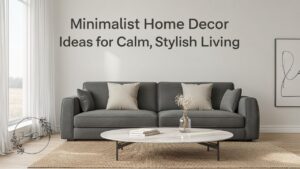
A beige sofa paired with linen cushions and a wooden coffee table still feels rich—just restrained.
Furniture Choices That Matter
Furniture defines the success or failure of minimalist spaces.
Characteristics of Minimalist Furniture
Look for:
- Clean silhouettes
- Hidden storage
- Neutral upholstery
- Natural materials
Avoid bulky, overly decorative designs that dominate the room.
Smart Placement
Minimalist layouts prioritize circulation. Furniture should never block natural pathways or light sources.
Minimalist Home Decor for Small Spaces
Small homes benefit immensely from minimalism.
Why Minimalism Works in Compact Homes
With fewer items:
- Rooms feel larger
- Cleaning becomes easier
- Storage is more efficient
Practical Tips
- Choose multi-functional furniture
- Mount shelves instead of using floor units
- Use mirrors strategically
- Stick to a limited color palette
In small apartments, minimalist home decor can completely transform how space is perceived.


Lighting in Minimalist Interiors
Lighting often does more than decor in minimalist homes.
Natural Light Is Key
Minimalist spaces maximize:
- Large windows
- Sheer curtains
- Reflective surfaces
Artificial Lighting Strategy
Instead of one harsh light:
- Use layered lighting
- Warm LED tones
- Simple fixtures
Soft lighting enhances calm and depth without clutter.
Textures, Materials, and Subtle Warmth
Minimalism isn’t only visual—it’s tactile.
Materials That Work Best
- Wood
- Linen
- Wool
- Stone
- Clay
These materials add warmth without visual noise.
Balancing Comfort and Simplicity
A neutral sofa becomes inviting with textured throws or cushions—used sparingly.
Common Mistakes to Avoid
Even well-intentioned minimalism can go wrong.
Over-Minimizing
Removing personality leads to cold, lifeless spaces. Minimalism should still feel human.
Ignoring Storage
Hidden clutter is still clutter. Smart storage is essential.
Copying Without Adapting
Minimalism isn’t one-size-fits-all. Your lifestyle should guide your design choices.
Personal Background: The Rise of Minimalist Design
Minimalism didn’t appear overnight. Its roots trace back to Japanese Zen philosophy, Scandinavian design, and post-war modernism.
Cultural Evolution
- Japanese interiors emphasized simplicity and balance
- Scandinavian design focused on function and warmth
- Modern architecture embraced clean lines
Today, minimalist home decor reflects a global shift toward intentional living, sustainability, and emotional wellness.
Financial Perspective
Interestingly, minimalism often reduces long-term spending. People buy fewer items, invest in quality, and avoid impulse purchases—leading to healthier financial habits.
Frequently Asked Questions
FAQ Section
Is minimalist home decor suitable for families?
Yes. With proper storage and durable materials, minimalism works well for family homes.
Does minimalist decor feel cold?
Not when textures, warm tones, and lighting are used correctly.
How do I start transitioning to minimalism?
Begin with decluttering one room at a time and focusing on functionality.
Can minimalism work with color?
Absolutely. Muted or earthy colors work beautifully in minimalist spaces.
Is minimalist decor expensive?
It can be budget-friendly by focusing on fewer, intentional purchases.
How many decor items are too many?
If items distract rather than enhance, it’s time to edit.
Does minimalism improve mental health?
Many people report reduced stress and improved focus in minimalist environments.
Conclusion
Minimalism isn’t about perfection or emptiness—it’s about clarity. When done thoughtfully, minimalist home decor creates spaces that support calm, focus, and meaningful living. It allows your home to reflect who you are, not what you own.
In a world full of noise, a minimalist home becomes a quiet refuge—one intentional choice at a time.