Introduction
There’s a quiet kind of beauty that doesn’t shout for attention yet instantly makes you feel at ease. That’s exactly the emotion japandi design brings into a space. It’s calm without being cold, minimal without feeling empty, and stylish without trying too hard.
In the last few years, homeowners and designers alike have been gravitating toward interiors that feel grounding rather than overwhelming. In reality, this shift isn’t just about trends—it’s about how we want our homes to make us feel. japandi design sits perfectly at the intersection of beauty and purpose, offering spaces that are peaceful, functional, and deeply human.
At its core, this style blends Japanese minimalism with Scandinavian warmth. The result? Homes that feel lived-in, intentional, and emotionally balanced. Whether you’re redesigning a single room or rethinking your entire home, understanding japandi can completely change how you approach interior design.


Table of Contents
What Is Japandi Design?
The Origins of Japandi Design Philosophy
Core Principles of Japandi Design
Japandi Design Color Palette Explained
Materials and Textures in Japandi Interiors
Japandi Furniture: Form Meets Function
Room-by-Room Japandi Design Guide
Lighting in Japandi Design
Japandi Design vs Scandinavian and Japanese Styles
Common Mistakes to Avoid in Japandi Design
Is Japandi Design Expensive?
Personal Background: Why Designers Are Embracing Japandi Design
Frequently Asked Questions About Japandi Design
Conclusion
What Is Japandi Design?
Japandi design is an interior style that merges the simplicity of Japanese aesthetics with the cozy practicality of Scandinavian interiors. Think clean lines, natural materials, muted colors, and a focus on intentional living.
Unlike many modern trends that prioritize visual impact, japandi emphasizes how a space feels. Every object has a purpose. Every surface has room to breathe. Clutter isn’t just removed—it’s consciously avoided.
This design philosophy borrows heavily from two concepts:
- Japanese wabi-sabi, which finds beauty in imperfection and impermanence
- Scandinavian hygge, which focuses on comfort, warmth, and well-being
When these ideas meet, the result is a home that feels calm, grounded, and effortlessly elegant.
The Origins of Japandi Design Philosophy
Although the term “japandi” is relatively new, the relationship between Japanese and Scandinavian design goes back decades. Both cultures value craftsmanship, functionality, and respect for natural materials.
Japanese homes traditionally emphasize open spaces, low furniture, and harmony with nature. Scandinavian interiors, shaped by long winters, focus on warmth, light, and comfort. That said, both cultures independently arrived at minimalism—not as a trend, but as a way of life.
In the early 21st century, global design began blending these philosophies more intentionally. Designers noticed how seamlessly these styles complemented each other, and japandi design emerged as a refined, modern hybrid.
Core Principles of Japandi Design
Simplicity With Purpose
Minimalism in japandi design is never empty or harsh. Every item is carefully chosen, not just for looks but for usability. If it doesn’t serve a purpose or spark calm, it doesn’t belong.
Natural Connection
Nature is central to japandi interiors. Wood, stone, linen, clay, and bamboo dominate the material palette. These elements ground the space and create a subtle emotional warmth.
Balance Over Perfection
Unlike ultra-polished modern interiors, japandi embraces slight imperfections. Handcrafted furniture, textured ceramics, and organic finishes add soul to the space.
Function First
Furniture is practical, layouts are intentional, and spaces are designed to be lived in—not just photographed.
Japandi Design Color Palette Explained
The japandi color palette is intentionally restrained. Loud colors are avoided in favor of tones that feel calming and timeless.
Common colors include:
- Warm whites and soft creams
- Beige, sand, and taupe
- Muted greys
- Earthy browns
- Charcoal and soft black accents
- Subtle greens inspired by nature
Rather than contrast through color, japandi design creates interest through texture and material variation. This keeps the space visually engaging without feeling busy.
Materials and Textures in Japandi Interiors
Materials are where japandi truly shines. Instead of glossy finishes or synthetic surfaces, the focus is on authenticity.
Popular materials include:
- Solid wood (oak, ash, walnut)
- Stone and concrete
- Linen and cotton textiles
- Hand-thrown ceramics
- Rattan and cane
- Matte metals in black or brushed brass
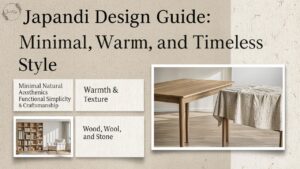
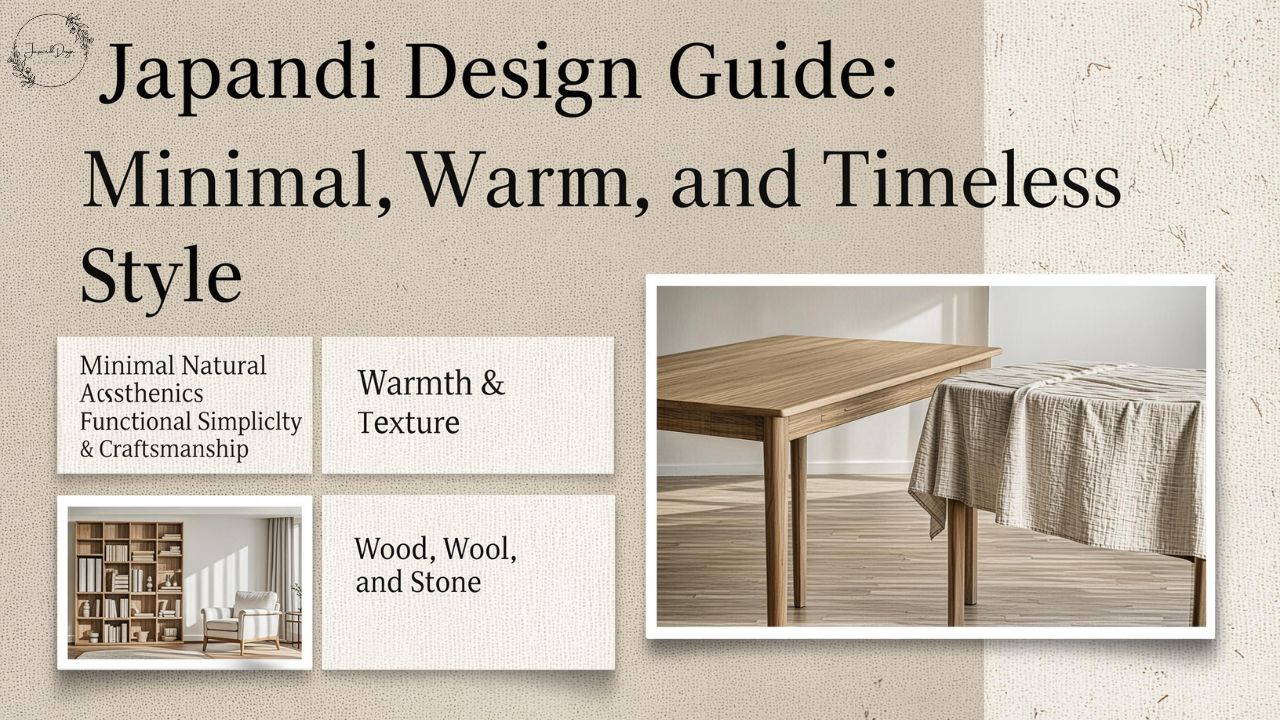
Layering textures is essential. A smooth wooden table paired with rough ceramic bowls and soft linen runners creates depth without clutter.
Japandi Furniture: Form Meets Function
Furniture in japandi design is low-profile, clean-lined, and thoughtfully crafted. Pieces often sit closer to the ground, inspired by Japanese interiors, while maintaining Scandinavian comfort.
Key characteristics include:
- Simple silhouettes
- Exposed wood grain
- Neutral upholstery
- Minimal ornamentation
- High craftsmanship
Instead of filling a room with furniture, japandi spaces rely on fewer, better pieces. One well-made chair is valued more than three decorative ones.
Room-by-Room Japandi Design Guide
Japandi Living Room
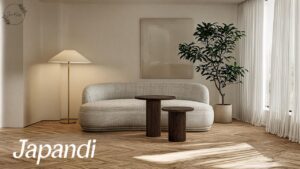
A japandi living room feels open and breathable. Sofas are structured yet comfortable. Coffee tables are solid wood or stone. Decorative items are limited to a few meaningful pieces.
Japandi Bedroom
In bedrooms, japandi design encourages rest and simplicity. Low beds, neutral bedding, soft lighting, and natural textures create a serene sleeping environment.
Japandi Kitchen
Kitchens lean toward flat-front cabinetry, wood accents, open shelving, and minimal hardware. Functionality is key, but warmth is never sacrificed.
Japandi Bathroom
Stone basins, wooden vanities, matte fixtures, and soft lighting turn bathrooms into spa-like retreats.
Lighting in Japandi Design
Lighting plays a quiet but powerful role. Natural light is prioritized wherever possible. Artificial lighting is warm, diffused, and never harsh.
Common lighting choices:
- Paper or fabric pendant lights
- Soft LED wall sconces
- Floor lamps with natural shades
- Hidden ambient lighting
Rather than one bright source, japandi interiors rely on layered lighting to create mood and depth.
Japandi Design vs Scandinavian and Japanese Styles
While closely related, these styles aren’t identical.
Japanese design is more austere and deeply rooted in tradition. Scandinavian design is lighter, brighter, and slightly more playful. Japandi design finds the middle ground—structured but warm, minimal but inviting.
In practice, japandi homes often feel more modern and globally influenced than either style alone.
Common Mistakes to Avoid in Japandi Design
One common mistake is confusing japandi with empty minimalism. Removing too much can make a space feel cold and unfinished.
Other mistakes include:
- Using overly modern or glossy furniture
- Adding too many decorative objects
- Choosing cool greys instead of warm neutrals
- Ignoring texture in favor of flat surfaces
Japandi thrives on balance, not extremes.
Is Japandi Design Expensive?
Japandi design can be surprisingly flexible in terms of budget. While high-quality materials are encouraged, the minimalist approach often means buying less overall.
Investing in fewer, well-made pieces usually leads to better long-term value. That said, second-hand furniture, handmade items, and local crafts can all fit beautifully within japandi interiors.
Personal Background: Why Designers Are Embracing Japandi Design
Many interior designers report burnout from fast-changing trends and overly decorative styles. Japandi design offers a return to thoughtful, lasting design principles.
Professionally, designers appreciate its adaptability across residential and commercial spaces. Financially, japandi interiors often age well, reducing the need for frequent redesigns and making them attractive to property investors and homeowners alike.
While there’s no “net worth” attached to a design style, japandi’s long-term appeal has made it a favorite among high-end architects, boutique hotels, and wellness-focused brands worldwide.
Frequently Asked Questions About Japandi Design
What makes japandi design different from minimalism?
Japandi design focuses on warmth and emotion, whereas minimalism often prioritizes strict simplicity.
Can japandi design work in small apartments?
Yes, japandi design is ideal for small spaces because it reduces clutter and emphasizes function.
Is japandi design suitable for families?
Absolutely. Its durability, comfort, and practical layouts work well for everyday living.
What type of wood is best for japandi interiors?
Light to medium woods like oak, ash, and beech are commonly used.
Can I mix plants into japandi design?
Yes, greenery adds life and enhances the natural connection of japandi spaces.
Does japandi design go out of style?
Its timeless principles make it far less trend-dependent than many modern styles.
Can japandi design be modern?
Definitely. Many contemporary homes blend japandi principles with modern architecture.
Conclusion
Japandi design isn’t just an interior style—it’s a mindset. It asks you to slow down, choose intentionally, and create spaces that support how you live rather than impress how they look.
In a world full of noise, japandi offers calm. In homes filled with clutter, it brings clarity. And for anyone seeking balance between beauty and function, this design philosophy feels less like a trend and more like coming home.